DecaPerfecta

The Medals

Every DecaPerfecta rosary comes with a Miraculous Medal — available in extra-large, large, or small. Those who wish may add a second medal, chosen according to their patron saint or personal devotion.

All additional medals in the range measure approximately 2 cm — the same size as the small Miraculous Medal. Each was selected for quality: clean striking, solid zamak — not the cheap aluminum wafers one sometimes encounters.

A note on noise: the smaller medals clink audibly against a large Miraculous Medal. Those who prefer silence should either pair additional medals with the small Miraculous Medal only, or forgo them altogether.

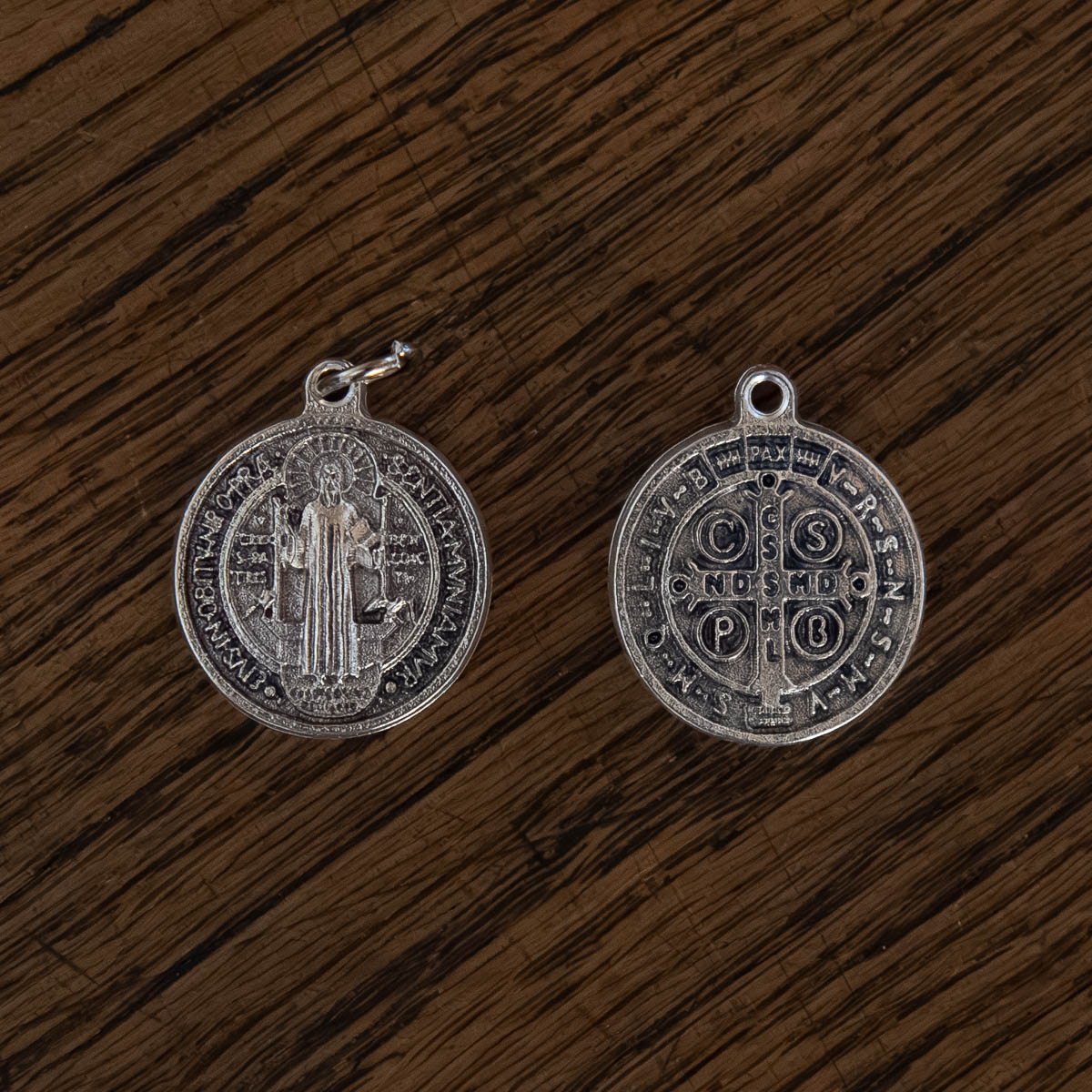
The Medal of Saint Benedict

The Medal of Saint Benedict is among the oldest and most widely distributed devotional objects in the Catholic tradition. Its origins reach back to the early Middle Ages; its present form was struck in 1880 to mark the 1,400th anniversary of the birth of Saint Benedict of Nursia.

The obverse depicts Saint Benedict — founder of the Benedictine order and patron of Europe — holding a cross and a chalice, symbols of his faith and his victory over evil.

The reverse is the heart of the medal. At its center stands the Benedictine cross, whose arms bear Latin inscriptions. The vertical bar reads CSSML — Crux sacra sit mihi lux: may the holy cross be my light. The horizontal bar reads NDSMD — Non draco sit mihi dux: let not the dragon be my guide.

In the four angles of the cross appears CSPB — Crux Sancti Patris Benedicti: the cross of the holy father Benedict. Above the cross, the word PAX — peace — is sometimes found.

Running along the outer edge of the medal is a further inscription: VRSNSMVSMQLIVB — Vade Retro Satana, Nunquam Suade Mihi Vana, Sunt Mala Quae Libas: Ipse Venena Bibas. In English: Begone, Satan, do not suggest to me thy vanities. Evil are the things thou profferest, drink thou thy own poison.

The medal is traditionally worn as a protection against evil — in temptation, in illness, and at the hour of death.
The Medal of Saint Benedict

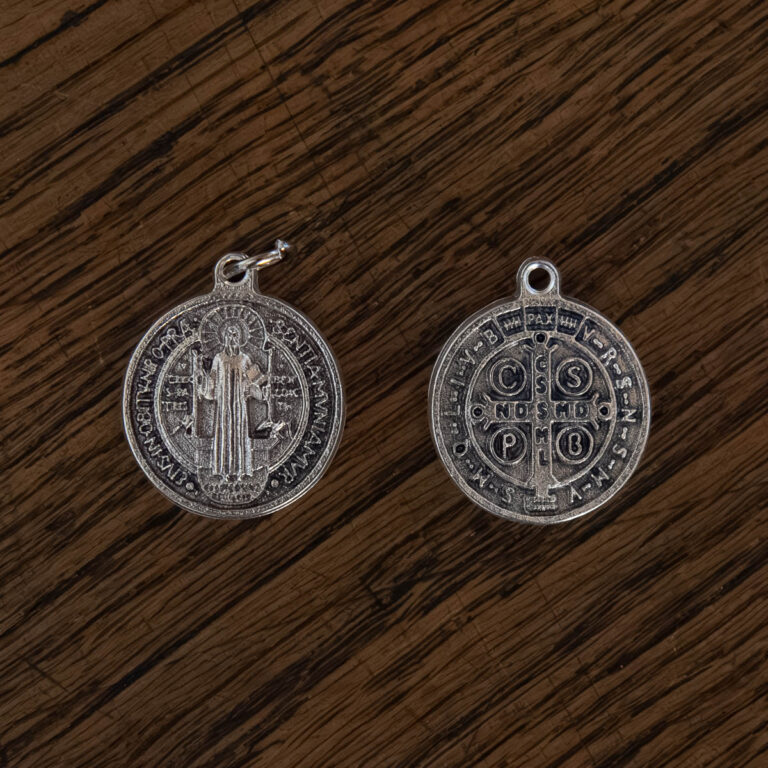
 The Medal of Saint Benedict is among the oldest and most widely distributed devotional objects in the Catholic tradition. Its origins reach back to the early Middle Ages; its present form was struck in 1880 to mark the 1,400th anniversary of the birth of Saint Benedict of Nursia.

The obverse depicts Saint Benedict — founder of the Benedictine order and patron of Europe — holding a cross and a chalice, symbols of his faith and his victory over evil.

The reverse is the heart of the medal. At its center stands the Benedictine cross, whose arms bear Latin inscriptions. The vertical bar reads CSSML — Crux sacra sit mihi lux: may the holy cross be my light. The horizontal bar reads NDSMD — Non draco sit mihi dux: let not the dragon be my guide.

In the four angles of the cross appears CSPB — Crux Sancti Patris Benedicti: the cross of the holy father Benedict. Above the cross, the word PAX — peace — is sometimes found.

Running along the outer edge of the medal is a further inscription: VRSNSMVSMQLIVB — Vade Retro Satana, Nunquam Suade Mihi Vana, Sunt Mala Quae Libas: Ipse Venena Bibas. In English: Begone, Satan, do not suggest to me thy vanities. Evil are the things thou profferest, drink thou thy own poison.

The medal is traditionally worn as a protection against evil — in temptation, in illness, and at the hour of death.

Sacred Heart / Immaculate Heart

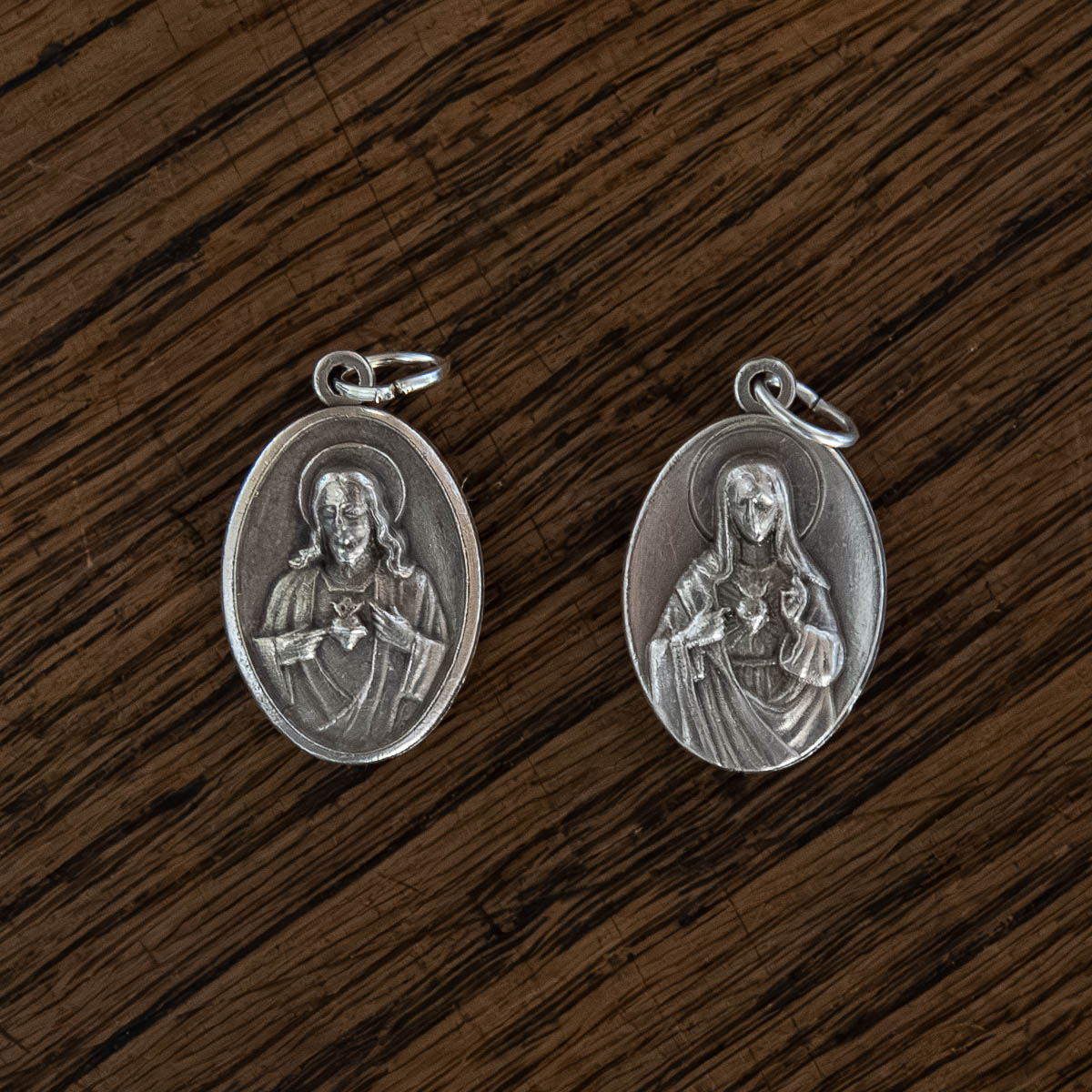
This medal unites two of the most profound devotions in the Catholic tradition. The modern form of devotion to the Sacred Heart of Jesus traces to the apparitions granted to Saint Margaret Mary Alacoque at the monastery of Paray-le-Monial between 1673 and 1675, in which Christ revealed his flaming heart, encircled by thorns, as a sign of his love for humanity. Devotion to the Immaculate Heart of Mary was shaped principally by Saint John Eudes and deepened by the apparitions at Fatima in 1917, where Our Lady asked for the spreading of devotion to her Immaculate Heart. The two devotions stand side by side in the liturgical calendar: the feast of the Immaculate Heart of Mary falls on the day immediately following the Solemnity of the Sacred Heart of Jesus.
Sacred Heart / Immaculate Heart

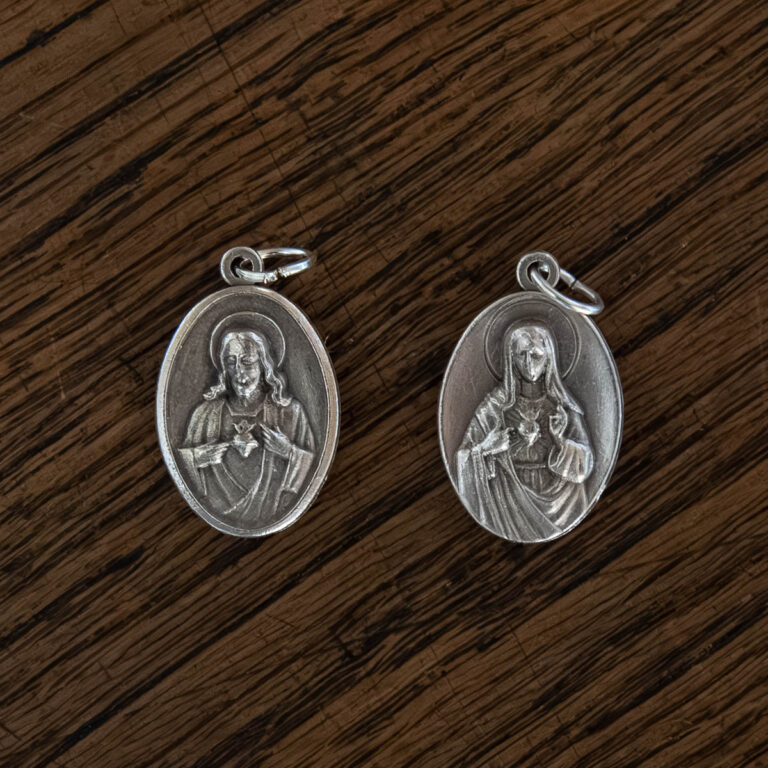
This medal unites two of the most profound devotions in the Catholic tradition. The modern form of devotion to the Sacred Heart of Jesus traces to the apparitions granted to Saint Margaret Mary Alacoque at the monastery of Paray-le-Monial between 1673 and 1675, in which Christ revealed his flaming heart, encircled by thorns, as a sign of his love for humanity. Devotion to the Immaculate Heart of Mary was shaped principally by Saint John Eudes and deepened by the apparitions at Fatima in 1917, where Our Lady asked for the spreading of devotion to her Immaculate Heart. The two devotions stand side by side in the liturgical calendar: the feast of the Immaculate Heart of Mary falls on the day immediately following the Solemnity of the Sacred Heart of Jesus.

Saint Joseph

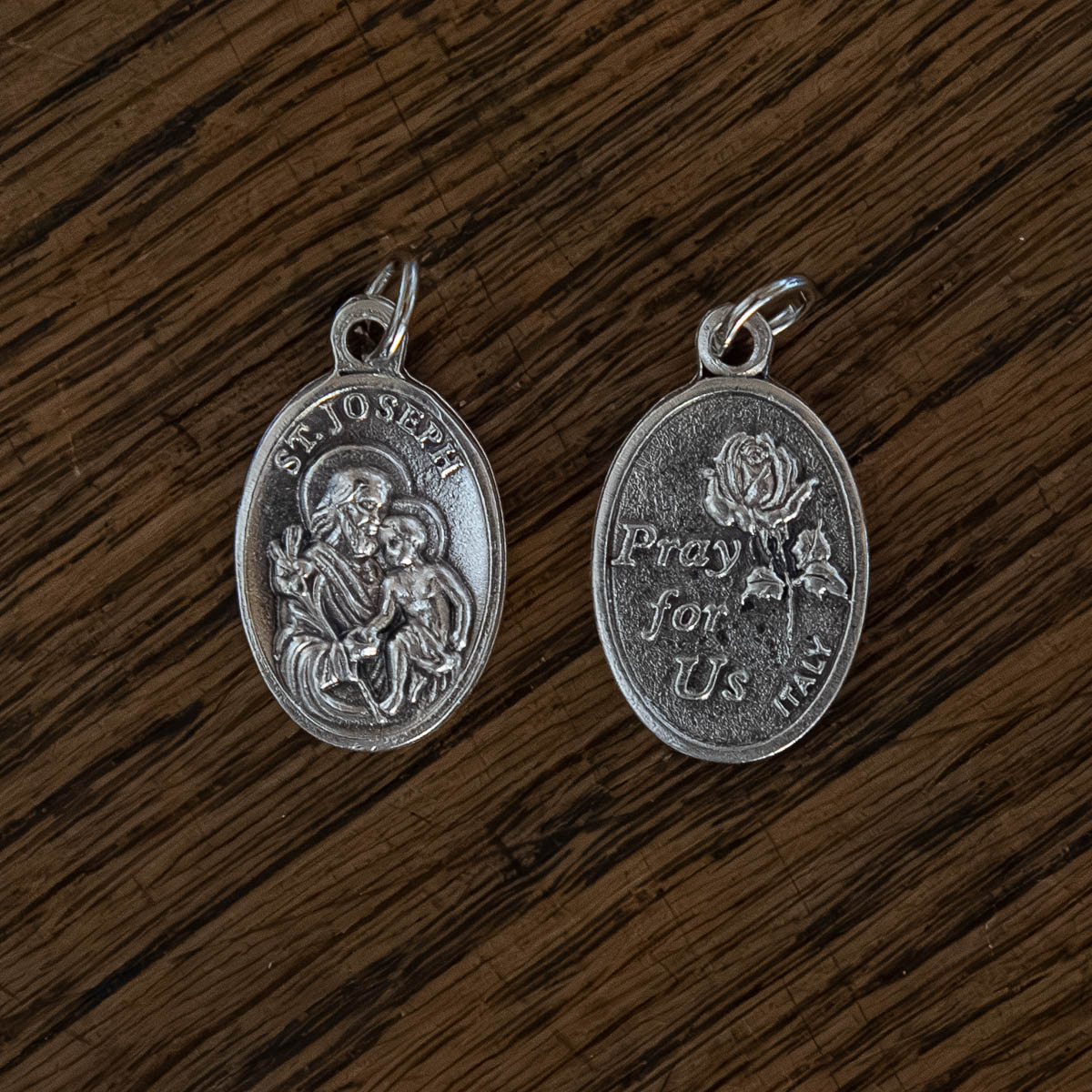
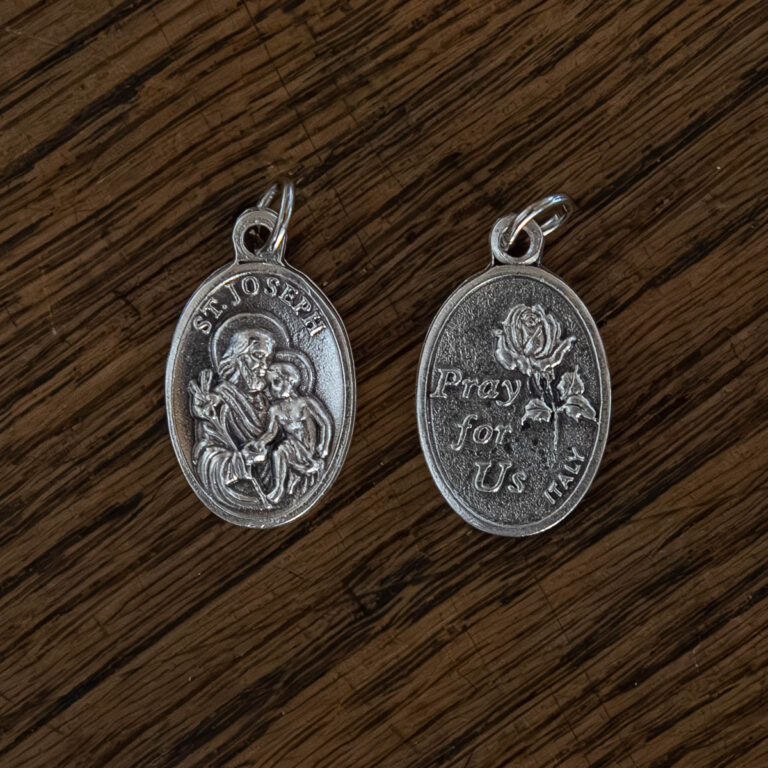
Saint Joseph — foster father of Jesus and spouse of Mary — holds the highest rank among the saints after Our Lady herself. The Gospels record not a single word spoken by him; he acts in silent obedience to God. The obverse depicts him with the Christ Child and the lily, the traditional emblem of his purity and chastity. In 1870, Pope Pius IX proclaimed Joseph patron of the Universal Church. He is venerated as patron of fathers and families, of workers, and of the dying — tradition holds that he died in the arms of Jesus and Mary. The Litany of Saint Joseph calls him Terror daemonum — terror of demons. A life lived in perfect obedience and perfect purity offers evil no foothold. That is the source of Joseph's strength.
Saint Joseph

Saint Joseph — foster father of Jesus and spouse of Mary — holds the highest rank among the saints after Our Lady herself. The Gospels record not a single word spoken by him; he acts in silent obedience to God. The obverse depicts him with the Christ Child and the lily, the traditional emblem of his purity and chastity. In 1870, Pope Pius IX proclaimed Joseph patron of the Universal Church. He is venerated as patron of fathers and families, of workers, and of the dying — tradition holds that he died in the arms of Jesus and Mary. The Litany of Saint Joseph calls him Terror daemonum — terror of demons. A life lived in perfect obedience and perfect purity offers evil no foothold. That is the source of Joseph's strength.
Saint Michael the Archangel / Guardian Angel

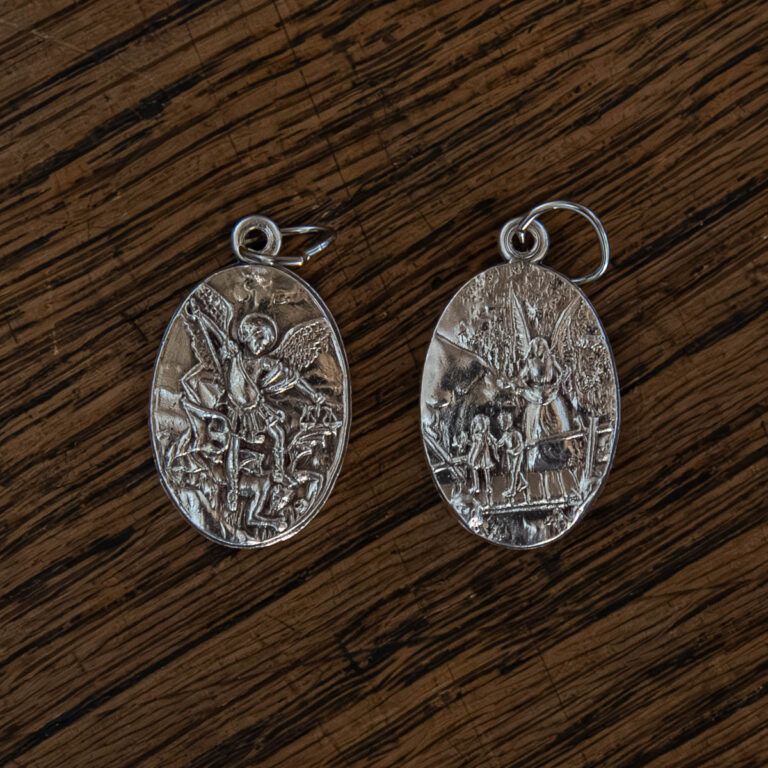
Saint Michael the Archangel — whose name means Who is like God? — is the leader of the heavenly hosts and protector of the Church. He is the only angel the Scripture explicitly designates as archangel, and appears in the sacred text on multiple occasions: as the defender of Israel in the Book of Daniel, as the guardian of the body of Moses in the Letter of Jude, and as the commander in battle against the dragon in the Book of Revelation. The reverse depicts the Guardian Angel — the personal companion who, according to the teaching of the Church, is assigned to every human being from birth. Michael protects the Church as a whole; the Guardian Angel accompanies the individual. Together on a single medal, they express protection in its fullest sense — from above and at our side.

Saint Michael the Archangel / Guardian Angel

Saint Michael the Archangel — whose name means Who is like God? — is the leader of the heavenly hosts and protector of the Church. He is the only angel the Scripture explicitly designates as archangel, and appears in the sacred text on multiple occasions: as the defender of Israel in the Book of Daniel, as the guardian of the body of Moses in the Letter of Jude, and as the commander in battle against the dragon in the Book of Revelation. The reverse depicts the Guardian Angel — the personal companion who, according to the teaching of the Church, is assigned to every human being from birth. Michael protects the Church as a whole; the Guardian Angel accompanies the individual. Together on a single medal, they express protection in its fullest sense — from above and at our side.

Saint Christopher

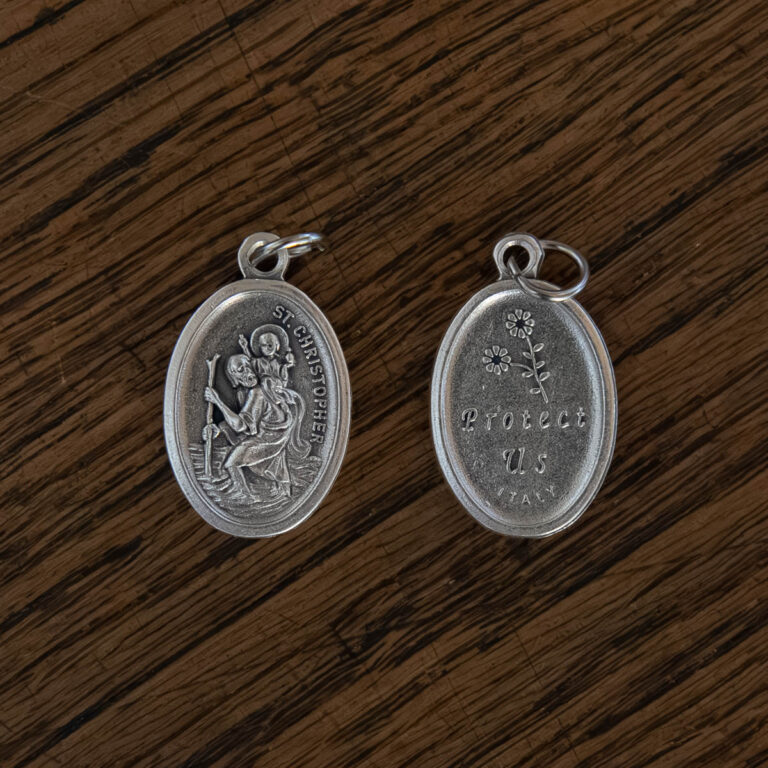
Saint Christopher is a legendary martyr of the third century whose historical existence remains uncertain — a fact that did nothing to diminish centuries of fervent veneration. According to tradition, he was a man of great stature who carried travelers across a treacherous river. On one occasion, a child he bore grew increasingly heavy as they crossed; the child revealed himself to be Christ — hence the name Christophoros: bearer of Christ. From this image of the ferryman who brings others safely to the other shore grew his patronage of travelers and pilgrims. The medal of Saint Christopher remains one of the most widely carried devotional objects in the Catholic world — no saint is more present on the dashboards of the faithful.

In 1969, his feast day was removed from the General Roman Calendar — he remains a saint, and his patronage stands undiminished. In the Traditional Latin Mass, his feast is celebrated without interruption on July 25th.

Saint Christopher

Saint Christopher is a legendary martyr of the third century whose historical existence remains uncertain — a fact that did nothing to diminish centuries of fervent veneration. According to tradition, he was a man of great stature who carried travelers across a treacherous river. On one occasion, a child he bore grew increasingly heavy as they crossed; the child revealed himself to be Christ — hence the name Christophoros: bearer of Christ. From this image of the ferryman who brings others safely to the other shore grew his patronage of travelers and pilgrims. The medal of Saint Christopher remains one of the most widely carried devotional objects in the Catholic world — no saint is more present on the dashboards of the faithful.

In 1969, his feast day was removed from the General Roman Calendar — he remains a saint, and his patronage stands undiminished. In the Traditional Latin Mass, his feast is celebrated without interruption on July 25th.

DecaPerfecta